Light Blocking Darkbox from Technical Instruments

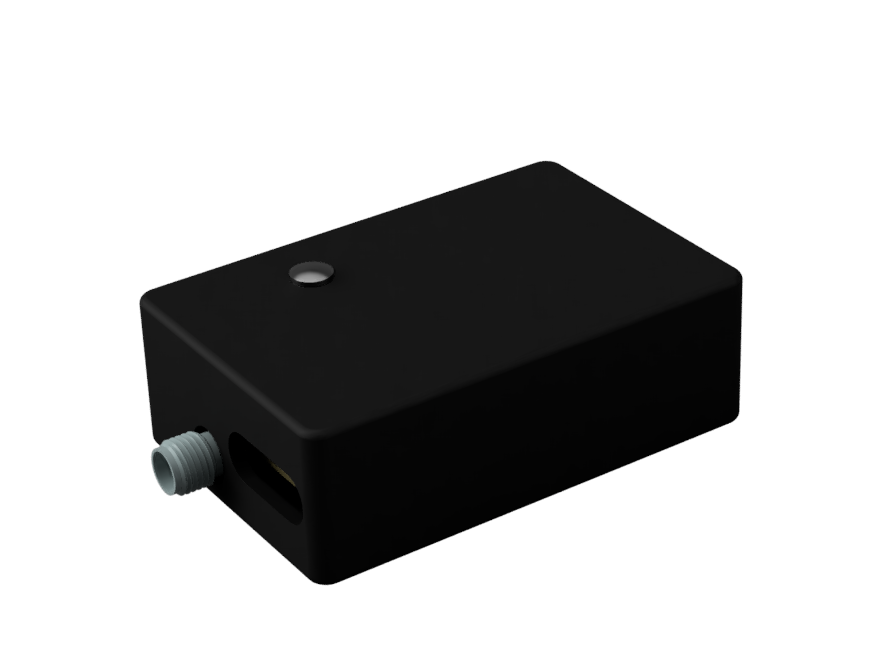
example of darkbox

Microscopists frequently work in the dark, in order to keep background ambient light out of our images . This means we need curtains, dark rooms, and even custom monitor color configurations in order to drop the room light for imaging. If you don’t want to go through the hassle, you can simply block the light from hitting the sample, right at the scope.

My company is now making a small product I’ve cooked up that blocks ambient light from hitting the objective/specimen area, while allowing full observation of a sample under transmitted and fluorescent light. It’s a simple solution to a common problem.

Example installation on a Nikon Ti-E inverted microscope

The tube seen at the top uses threaded, soft tipped set screws to clamp onto the condenser lens assembly at the bottom of the transmitted arm on an inverted scope. By pushing the arm to the back of it’s travel, you can leave the box attached and easily change specimens. Production versions also include a felt base which extends to the stage surface, forming a good consistent curtain against ambient light.

We can make these in flat top and attachable configurations for any type of transmitted condenser. Feel free to contact me if you are interested in buying one :-)

-Austin

Do lasers last forever? What to know before buying a launch.

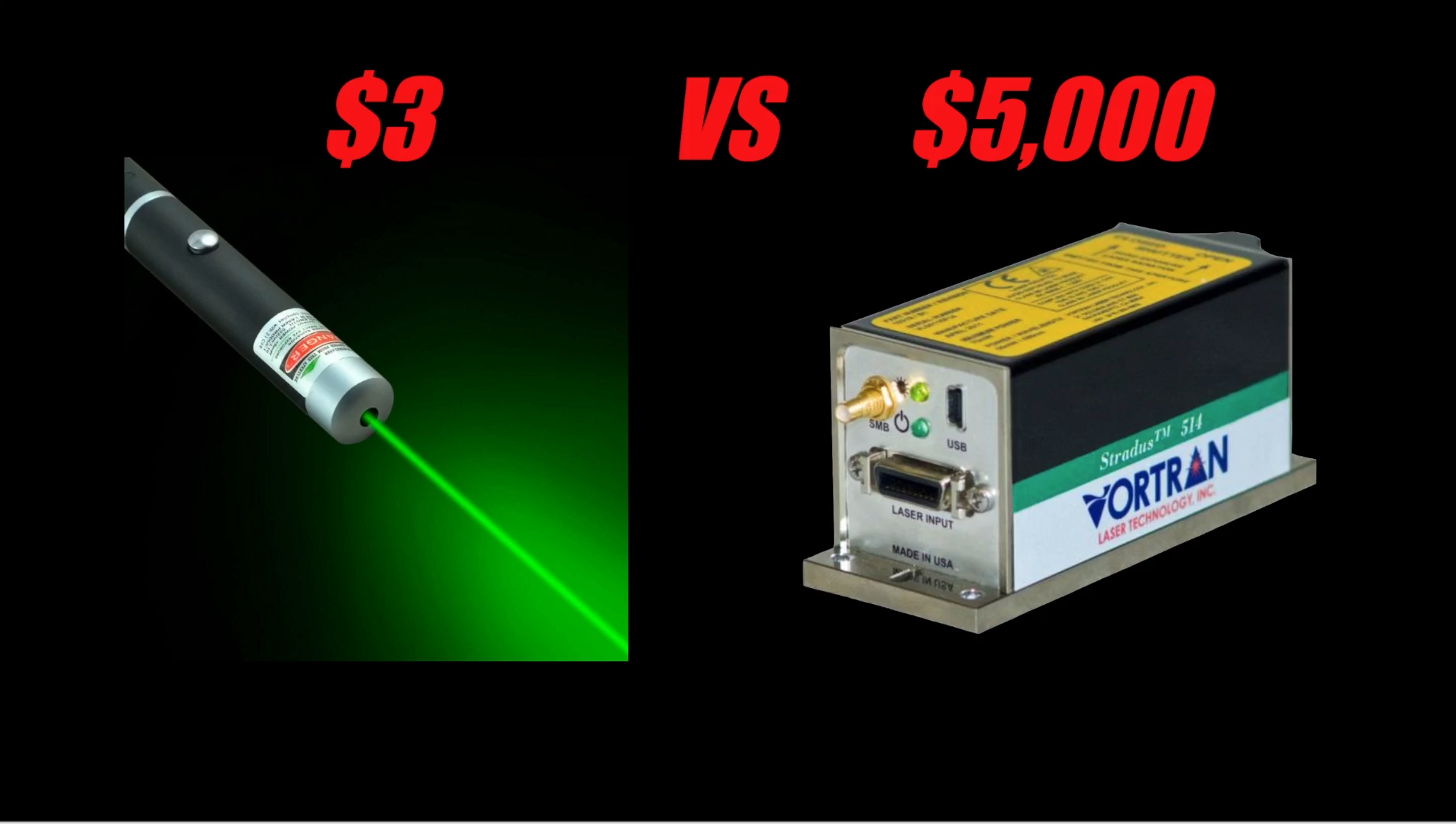
My company has been selling integrated and stand alone laser systems for about a decade now. Over that time laser use has drastically increased, but laser manufacturers have been slow to respond to the market demand. The state of the laser manufacturing industry is an interesting one, as it’s dominated by telecommunication applications, and our imaging/optical side of the market is a very small slice of the overall motivating financial pie that these major companies play in. To that end I wanted to share my experiences, especially with new owners or potential owners, on what to expect from one of these systems.

Lifetime

A typical laser marketing sheet will quote a lifetime of somewhere between 5,000 and 20,000 hours. You can find examples of this here and here.  Along with many customers, I assumed these were idealistic numbers, but also assumed that the lasers used in our applications would make at least half of that lifetime. It turns out, in my experience, roughly 5-10% of these lasers don’t make it near that long. A good indicator of what the laser manufacturers really expect can be found in the warranty. Most lasers quote a 1,000 hr and 1 or 2 year warranty. The lasers that I’ve seen do down typically range in the 400-800hr mark, but this is over 2 years or so of use. So – before you buy a laser assuming it’s going to last 10 years, investigate the warranty as well as the expected replacement cost. A failure rate of 1 in 10 is very high for a product that supposed to be so reliable.

Beam Quality

Microscopists use lasers primarily for single mode fiber coupling. I explained how this is done in my post on fiber types used in microscopy. One of the requirements for fiber coupling is that the beam quality emitting from the laser must be good enough to efficiently couple the fiber. I’ve seen one instance where placing a laser power meter in front of a laser showed 460mW of output, but I could couple no more than 60mW into a single mode fiber. Beam quality can change over time, reducing the overall coupling efficiency on the laser combiner, requiring either a repair or replacement laser head somewhere down the road. In this case the laser doesn’t “break” per-se, but it sure reduces it’s usefulness for our applications.

Service

Of the units I’ve had to get repaired or replaced, the typical lead time has been 6-8 weeks. Thankfully our integrating companies who make launches have been able to loan us stand-in units while a repair is taking place. Service costs have ranged from reasonable, to the most extreme case where a manufacturer claimed “this laser isn’t made to be serviced”. It had died in under 800 hours, while the manufacturer claimed a 40,000 hour expected lifetime! It’s important to consider how downtime may affect your instrument, and is an important aspect of negotiating a service contract for a laser equipped system.

Conclusions

I’m convinced that the laser suppliers in our industry have no idea how we typically run our instruments. I typically see 300 hours per year usage, whereas lasers are left on forever until they die in telecom applications (consider a 1 year/2000hr warranty. Running a system at 30% duty cycle in a year would provide this usage, but even heavily used microscopes don’t have that much uptime.) I think there is a lot of room for improvement. Setting fair expectations on lifetimes, providing reasonable product service turnarounds, and offering fair warranties are easy fixes and ways to increase market share for these companies. Until manufacturers decide to improve these things, the only alternative for the customer is to purchase a maintenance contract for laser equipped systems. It’s a gamble either way: If on contract and nothing breaks, then you’ve lost the contract price worth of money. If you don’t have a contract and a laser dies, you’re looking at a costly repair. My advice is to stick with straight diode lasers if possible, they seem to have a longer life potential. I’d also use the lowest power you can get away with. Power directly equates to massive cost increases, and I routinely see people running systems at 70-90% attenuation. In these cases a laser was purchased at a high premium for power that won’t be used, and the risk/cost of replacement is much higher. If you stick with reasonable power levels, it’s sensible to avoid a service contract, as one dead laser may cost $6-9k, vs. a high power laser, say at 350mW, costing $19k to replace.

Coherent light has numerous advantages for microscope coupling, but it’s important to go into a major system purchase with eyes wide open. I believe the most important thing to consider is the real world expectation. What can I expect for power 2-3 years down the road? What should I budget for replacement cost? Is there a plan for avoiding downtime in a service contract? Having a good handle on these costs will enable you to make an informed decision on what you buy, and will avoid the sticker shock and downtime of a dead laser, should one go bad.

-Austin


How TIRF works on a Microscope

TIRF is a widely used tool for effectively creating a super resolution instrument out of a standard widefield microscope. The cool part of TIRF is that it bypasses the limits of axial resolution on the scope not by altering the optics per-se, but by altering what gets excited. In a normal widefield fluorescent microscope, photons are emitted from an arc lamp, LED, or other source that are of numerous polarization, phase and angular states. In effect you  shower the specimen by flooding light through the objective, exciting any fluorescent molecule in the path of the light. The problem is that what gets excited may be inside, below or out of the objective’s focal plane. Any image you collect from such a setup represents both the “signal” (molecules in focus) and “noise” (molecules that aren’t in focus) in the field of view. More importantly, It’s common to have out of focus noise overpower in-focus signal, thereby reducing or restricting what information can be obtained from the microscope. My fancy cartoon below shows an example of a widefield system and it’s illumination path.

Typical fluorescent excitation

Of course, one simple solution, but an expensive one, to this problem is to add a pinhole-based confocal to the optical system. While a confocal does reduce or eliminate the out of focus haze in the image, it doesn’t provide any increase in Z accuracy. This axial resolution limit is still based on the objective’s performance.

TIRF avoids this limit by restricting the excitation field. In order to accomplish this, TIRF uses a laser, coupled to the microscope and most commonly delivered through the objective, to deliver excitation energy into the specimen. The trick is not that the laser excites the fluorescent molecules, the trick is that the laser, if set at a proper angle (critical angle) will bounce off of the bottom of a specimen container. When the laser bounces back there is a small electromagnetic field created, just on the specimen-side of the coverslip. This EM field is the same frequency as the bounced laser light, allowing it to excite fluorescent molecules. The field has an exponential decay as it extends from the coverslip, so it’s only strong enough to excite molecules that are very close to the interface of the coverslip and the specimen (usually the excitation field in TIRF is ~100nm of depth).

TIRF Cartoon example. Note the steep approach angle for the beam, which can only be used with high NA lenses (~1.49)

It’s hard to believe that light could be reflected back into a medium simply because of a refractive index change, but I was able to visually capture this effect on a large scale when installing a customer’s system at UC Davis. The image below is of a fluid filled jar, with some bits of glass tube floating in it. The cool part is the laser beam. You can see the beam emitting from the objective and passing through the fluid. When the beam reaches the air (lower refractive index),  the refractive index change is at or beyond the critical angle the light can follow, so the light is reflected back into the previous, higher refractive index medium (the fluid). This is the fundamental effect that makes TIRF possible.

Laser emits from lens, but is trapped in fluid and reflected back down.

The limitations to this technique are that you need a laser, you need an optic that can reach the critical angle, and you need to have something in your research that can sit on the coverslip, i.e. this won’t work for anything farther than ~100nm from the coverslip. If everything lines up, you get an image representing roughly a 10x improvement in Z resolution over a confocal microscope, qualifying this as a “super resolution” technique.

If you’d like to learn more about the theory of TIRF microscopy I highly recommend the MicroscopyU explanation, which does a better job of explaining the physics than my overview here.

***Thanks to Professor Jawdat Al-Bassam of UC Davis for allowing me to demonstrate this effect on his instrument!

-Austin

Update on Andor Neo Camera

I had an opportunity to demonstrate the Neo camera on site with a customer yesterday at UC Davis. We captured some great images of GFP tagged pathways on PKC cells. We were able to image the cells at exposures down to 1ms @ 2×2 binning using Metamorph. We were also able to capture extreme fields of view while scanning Z at full resolution and 1×1 bin, using 3-10ms exposures. The combination of the capture resolution and short exposures really change how you use the scope. I think the use of oculars on a fluorescent microscope might be sunsetting with the advent of these sensors. I’ll post some data from this demo once it’s completed.


Neo camera at 100fps

Andor’s Neo camera has been out for about a year now. I first wrote about using it back in February. The camera immediately showed the major difference in field of view between sCmos sensors and traditional interlines quite well, but the speed, binning, sub-array and bias clamp controls weren’t available. Over the past few firmware/SDK updates, Andor has steadily addressed these limitations. I had a chance to field test the latest combo of firmware and driver SDK. Basically I found a camera that runs at 100fps with roughly four times the field of view of a typical Sony285 type sensor. In my last post I noted that people would wait until end user software platforms could take advantage of the sCmos architecture. I think the wait might be over.

I’ll continue to report on this as I have an opportunity to put it through it’s paces. I’m curious to see how people respond to it’s performance…

-Austin

Hands on with Imaris Bitplane

During my company sales meeting I had the opportunity to receive training on Imaris Bitplane, which we are now able to sell in our dealership territory. I’ve come across this software package off an on over many years, and have always wanted to get under the hood and check it out. Below is an example of what the software can do. In this case the program identified neuronal processes, as well as tagged nodes for 3-D analysis.

The software fits the needs of a very specific market.  I would suggest looking at this software only if you already own or are buying a confocal of some type, or have a very good familiarity with deconvolving images. You would also have a need to visualize 3-D interactions or structures which occur on a larger scale than that of your axial resolution limit, and/’or have a need to measure volumetric objects either in a single data stack, or in a timelapse.

Software like this has an advantage over standard imaging software in that it is specifically targeted to do one thing and do it well. With general-use imaging products, the developers and support engineers are spread thin writing code to do everything from image analysis in 2-D, to device driver updates, to archive connections, boutique analysis protocols (i.e. FRET), image processing filters and so forth. The advantage of a specifically targeted product is that the engineers can concentrate on making the key jobs of the software work as well as possible, and because it has a targeted application, the interface can be built around a known user workflow. In this case Bitplane does extremely well with measuring and visualizing anything in 3-D, and has a very powerful 2-D/3-D tracking capability.

As with all new technologies I’m exposed to, this tool looks great – but I haven’t learned it’s limits by working on real world data. In an effort to discover where this software fits, I’d like end-users to provide some data sets with requests for analysis from the data, so I can both learn and test this software. The upside for users is that they get to find out if this tool might help them, simply by uploading a stack. You can also get a cool 3-D movie like the one above to show off at the next lab meeting :-)

If you’re interested in finding out what this tool can do, and you have some data handy, please place a comment below, and I’ll email you my FTP upload information. I’m quite curious to see how this software stands up to some real world challenges.

-Austin